Since 1996, Payroll Partners has been a trusted provider of payroll and workforce management services, headquartered in Arlington, Texas. As a privately held business— not a franchise— we’ve built lasting relationships by combining sophisticated cloud-based technology with personalized, local service. We sp
ecialize in serving small and medium-sized businesses, churches, private schools, and nonprofit organizations nationwide. Our mission is simple: to simplify payroll and HR so that you can focus on your people and your purpose. Payroll Partners delivers comprehensive payroll, timekeeping, and human resources solutions through a suite of integrated modules. Our Human Capital Management system unites payroll processing, core HR, time and attendance, ACA compliance, reporting, and mobile access — all working together to simplify workforce management. Flexible, scalable, and designed for businesses across every industry, our solutions adapt to your organization’s changing needs while ensuring accuracy, efficiency, and compliance.
Cloud-based technology combined with personalized local service
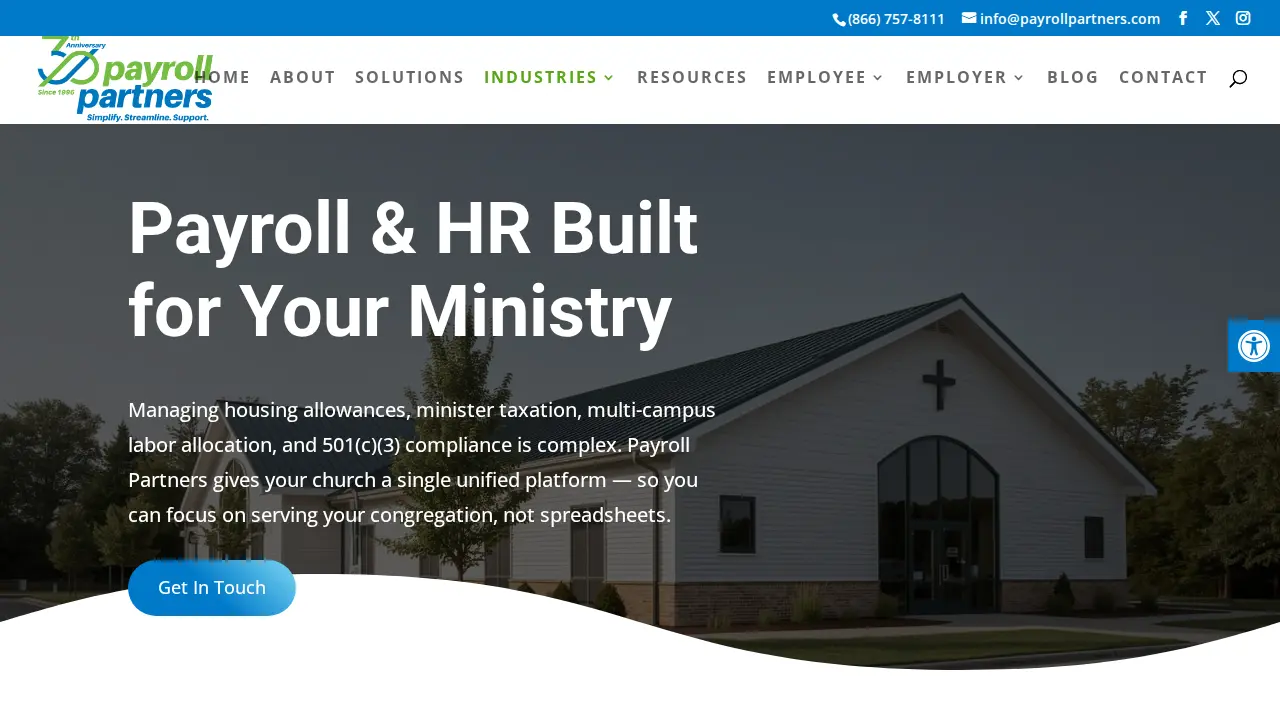
Specialized solutions for churches and nonprofit organizations
Dedicated implementation manager and ongoing support
Comprehensive payroll, timekeeping, and HR solutions in one integrated platform
Services
Payroll Processing
Comprehensive payroll processing for small and medium-sized businesses, churches, private schools, and nonprofit organizations.
Cloud-based technologyPersonalized local serviceAccurate and efficient payroll calculationsCompliance with federal, state, and local tax laws
Time & Labor Management
Flexible, accurate time tracking across every department and campus.
Physical Time ClocksBadge, biometric & proximity fob readersWeb PortalMobile AppEmployee Leave TrackingTime Off Requests
HR & Compliance Solutions
Integrated HR and compliance solutions for churches and nonprofit organizations.
Dedicated implementation manager and ongoing support from a team that understands ministry.
Dedicated implementation managerSupport by phone, email & online requestSystem training using your actual dataOnline help center & instructor-led training libraryDedicated success team for long-term adoption
Credentials & Certifications
Certified Payroll Professional
Since 2010
Reviews
Rating
5
★★★★★
Reviews
32
"Aaron and Ashley are knowledgeable and have been great to work with."
Frequently Asked Questions
Do employers have to pay for new hire orientation and training? +
Orientation formally introduces the new hire to the company — including its mission, culture, values, vision, policies, procedures and fringe benefits. Employers are generally not required to pay for new hire orientation and training under federal law, but it is considered a benefit that can be offered at the employer's discretion.
Should you pay an employee who resigns with two weeks’ notice? +
An employee who resigns with two weeks' notice may think they are doing you a favor, but it can be a payroll headache, especially if you have not yet processed their final paycheck. Employers should ensure that the employee is paid for the notice period and any work performed during that time.
Do we have to honor an employee’s two-week notice period? +
Assuming there is no contract or agreement to the contrary, you’re not required to keep an employee on during their resignation notice period or pay them for the notice period. However, it is common practice to honor the notice period and pay the employee for any work performed during that time.
If an employee resigns with two weeks’ notice, should you pay them for the notice period? +
An employee who resigns with two weeks' notice may think they are doing you a favor. However, it can be a payroll headache, especially if you have not yet processed their final paycheck. Employers should ensure that the employee is paid for the notice period and any work performed during that time.
Can employers deduct negative leave balances from final wages? +
The general consensus is that under federal law employers can deduct negative paid leave balances from an employee's final wages. However, it is advisable to check state-specific regulations and consult legal counsel to ensure compliance.
 5.0