FedWise Advisors
Where Your Financial Future Takes Flight
 5.0
FedWise Advisors empowers federal employees to make wise financial decisions through specialized expertise and holistic planning.

About
Welcome to FedWise Advisors! We empower federal employees to make WISE financial decisions.
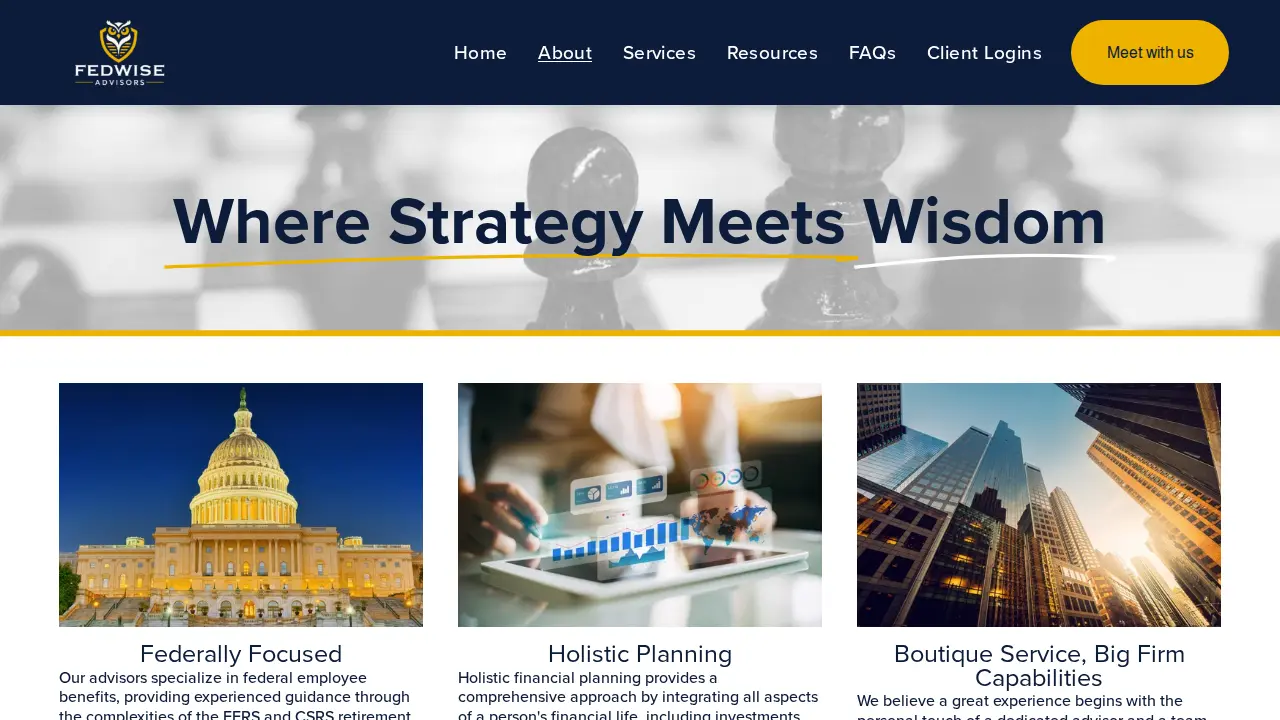
Where Your Financial Future Takes Flight. Why Choose Us? Federal focus ensures clients receive specialized expertise in their complex benefits. Holistic planning allows us to address all aspects of a client’s life. Boutique service, big‑firm capabilities provides us top‑tier technology, market insights, and extensive resources found in larger firms. Where Strategy Meets Wisdom. Wise Services & Solutions. Our approach covers all areas of an individual’s financial picture, rather than focusing on isolated areas like investments and retirement planning. This means we assist with anything and everything related to your finances, leaving you and your family feeling financially confident. Wisdom In All Areas. Across The Map, Across Agencies. As Featured On:
Services
Retirement Planning
Retirement Income Planning: Forecast retirement income from Pension, Social Security, and withdrawals from investments. Retirement Feasibility: Analyze your retirement to see if it may withstand the test of time and the unknowns. Inflation and Cost-of-living-adjustments: Review gap between income and expenses over time and work to close that gap with investment withdrawals. Lifestyle & Goals: Planning for travel, hobbies, and desired retirement activities. Debt Management: Paying off or managing debt before and during retirement.
Tax Strategies
Tax-efficient withdrawal strategy: Understand the tax implications, order of account withdrawals, and manage required minimum distributions (RMDs). Roth Conversions: Timing conversions strategically to avoid higher tax brackets. Capital gains and investment tax strategies: Tax loss harvesting, long versus short term gains, and direct indexing strategies. Medicare considerations: Avoiding high taxable income to avoid IRMAA surcharges. Charitable giving: Donor-advised funds and qualified charitable donations (QCD’s)
Federal Benefits
Federal Employee Health Benefits (FEHB): Options and how it works in retirement for you. (And your family) Federal Employee Group Life Insurance (FEGLI): Option A, B, C, and D. What is best for you now, and in retirement. Federal Long Term Care Insurance Program (FLTCIP): Should you enroll, coverage amount, guidance when premiums increase. Pension Survivor Benefit: What strategy makes the most sense for your family. Federal Buyouts: Usually this requires a quick decision. We provide guidance if this may make sense for you. Postponed vs deferred retirement: Guidance on what applies to you and potential ramifications of this decision. Job Analysis: Does it make sense to entertain an outside job offer and limit your future benefits.
Estate Planning
Wills, POAs, and Medical Health Directive: Ensure clients have the necessary documents on file and up-to-date. Trusts: Review feasibility of trusts and the best Trust strategy for you. Tax-efficient inheritances: Structure assets to avoid Federal, State, and Estate taxes. Inherited IRAs: Understanding tax implications and withdrawal requirements. Beneficiary designations: Ensure account beneficiaries are titled correctly to avoid unintended consequences. Probate avoidance: Structuring assets to bypass probate to reduce delays, legal fees, and court involvement. Legacy and charitable giving: Establish trusts, donor-advised funds, or bequests to support causes you care about.
Cash Flow Planning
Understand Income Sources: Pension and annuities, Social Security, Retirement and investment account withdrawals, rental income, part-time work, etc. Sustainable withdrawal strategy: 4% Rule, bucket strategy, and dynamic withdrawals. Budgeting and Expense Management: Identify fixed vs discretionary expenses and their long-term sustainability. Emergency and Contingency Planning: Maintaining a cash reserve for unexpected expenses.
Investment Management
Risk Tolerance: Retirement projection and questions to determine appropriate risk level for each client and their accounts. Account-based Investment allocation: Allocation based on liquidity needs from each specific account, rather than a blanket approach. Investment Strategy: Determine the best asset allocation strategy using low cost index funds and mutual funds where viable. Tax-efficient Investment strategies: Review benefits of Roth IRAs, tax-loss harvesting, direct indexing, municipal bonds, and tax-deferred annuities. ESG and Impact investing: Focused on environmental, social, and governance factors.
Credentials & Certifications
Reviews